A workflow taught by Adobe Certified Instructors at Adobe Video World.
A trailer’s job is to excite an audience and make them want to watch — a distinct, high-stakes editing craft. From building tension to cutting to music to teasing without spoiling, trailer editing follows proven techniques. This guide covers editing a compelling trailer that hooks audiences and builds anticipation.

The Trailer’s Purpose
A trailer exists to make people want to see the full thing. It must convey the tone, hook the audience, and build excitement and anticipation, all while leaving them wanting more, which makes trailer editing a focused, persuasive craft.
Every choice serves this goal of generating desire to watch. Unlike the full work, a trailer is a curated, intensified taste designed to thrill, so editing one means crafting maximum excitement and intrigue from the best moments.

Establish the Tone
A trailer must convey what kind of experience the work offers. Establishing the tone early — thrilling, funny, dramatic, scary — tells the audience what to expect and draws in those who want that experience.
This tone-setting is crucial, since the trailer represents the work’s feel. Editing the opening to convey the genre and mood clearly, so the right audience is hooked, ensures the trailer attracts viewers who’ll want to see the full thing.

Use the Three-Act Structure
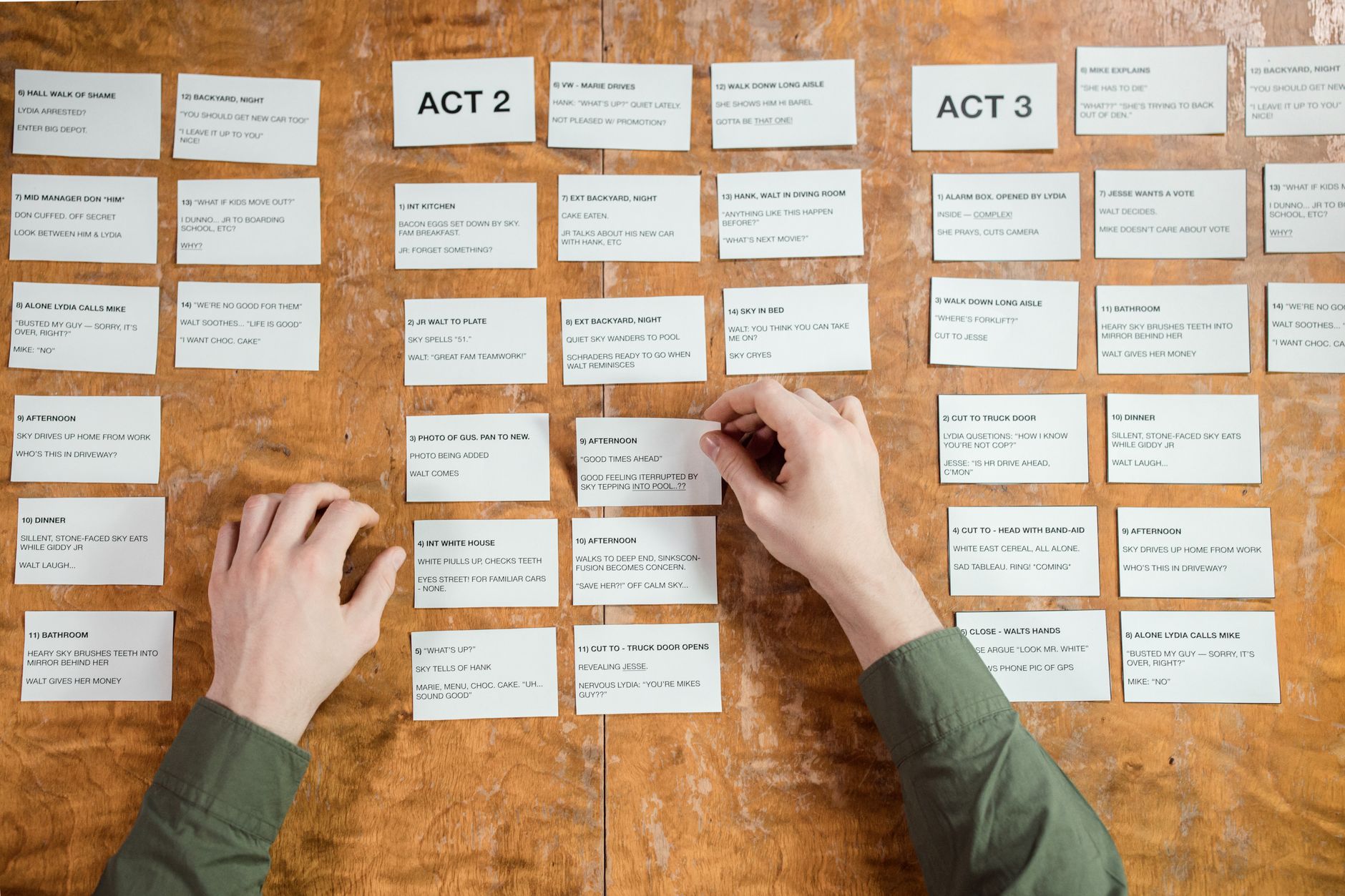
Trailers often follow a classic three-act structure. The first act sets up the premise and characters, the second builds the conflict and stakes, and the third escalates to a climactic, exciting montage that peaks the anticipation.
This structure, drawn from storytelling principles, gives the trailer a satisfying build. Moving from setup to rising tension to an explosive climax, the three-act trailer takes the audience on a compact emotional journey that leaves them hyped.
Build Tension and Pace
Trailers build excitement through escalating pace. Starting measured and accelerating the cutting toward the climax, with the energy and tension rising, creates the building anticipation that makes a trailer thrilling.
This rising intensity, using our pacing techniques, mirrors the emotional build. Accelerating the cuts and energy toward a climactic peak, often with a final rapid montage, delivers the exciting crescendo that trailers are known for.

Cut to the Music
Music is the engine of a trailer. Choosing a track that builds and drives, and cutting precisely to its beats, swells, and drops, synchronizes the visuals with the emotional build for maximum impact.
Trailer music, with its builds and hits, is integral to the form. Editing tightly to the music’s structure, so the cuts and reveals land on the beats and the climax hits on the drop, using our markers, creates the powerful, synchronized energy of a great trailer.
Tease Without Spoiling
A trailer must intrigue without giving everything away. Showing enough to excite — the premise, the stakes, the best moments — while withholding key revelations and the ending keeps the audience wanting to see the full work.
Balancing intrigue and restraint is an art, since a trailer that spoils too much removes the reason to watch. Teasing the exciting elements while keeping the mysteries and payoffs hidden is what makes a trailer compelling rather than a summary.
Add Impact with Sound
Sound design amplifies a trailer’s impact. Adding dramatic hits, risers, whooshes, and impactful sound effects on cuts and reveals heightens the energy and tension, giving the trailer its punchy, powerful feel.
These sound elements, layered with the music using our sound design techniques, make a trailer hit hard. The booms, risers, and impacts synced to the visuals and music create the visceral excitement that defines modern trailers.
Trailer Editing Best Practices
- Establish the tone and hook the audience early.
- Use the three-act structure to build the journey.
- Build tension with accelerating pace cut to the music.
- Tease without spoiling, and add impactful sound design.
Common Trailer Mistakes
- An unclear tone that doesn’t convey the experience.
- No build or structure, just assembled clips.
- Cuts that ignore the music’s beats and build.
- Spoiling too much, removing the reason to watch.
A Real Trailer Edit Example
Picture cutting a trailer for a thriller short film. You open quiet and intriguing, establishing the unsettling tone and the protagonist, then the second act introduces the threat and raises the stakes as the cutting quickens. The third act explodes into a rapid montage of the most thrilling moments, every cut landing on a building track’s hits, before a sudden hard cut to black on the music’s final boom and the title.
Risers and impacts punctuate the reveals, and the best scares are teased without showing their payoff. The audience is left desperate to see the full film — exactly what a trailer is built to do. That three-act build, music-locked cutting, and tease-don’t-spoil discipline is the proven craft behind a trailer that generates real anticipation.
Trailers for Any Content
Trailer techniques apply far beyond films, to YouTube channel trailers, course previews, event promos, and product launches. Any content that benefits from building excitement and teasing value can use the trailer’s structure — establish the tone, build the stakes, climax with the highlights, and leave the audience wanting more.
Adapting the length and intensity to the context keeps it appropriate, from a thirty-second channel trailer to a two-minute event promo. Combined with the hook techniques in our intro guide, the trailer’s anticipation-building craft becomes a versatile tool for promoting any content that needs to excite an audience into watching or attending.
Trailers and Expectation
A trailer sets expectations that the full work must meet, so it should excite honestly without overpromising. A trailer that misrepresents the content draws disappointed viewers, while one that accurately conveys the experience attracts the right audience.
Editing a trailer means capturing the genuine appeal and tone of the work, intensified, rather than fabricating excitement the full piece doesn’t deliver. The trailer is a promise, and the work must keep it for the audience to be satisfied.
Balancing maximum excitement with honest representation is the trailer editor’s art. Conveying the true experience compellingly, so the trailer thrills while accurately previewing what’s to come, is what makes it effective and the audience’s anticipation rewarding rather than betrayed.
A polished trailer closes on a credit block, which adding rolling credits in Premiere Pro make easy to build.
Key Takeaways
- A trailer makes audiences want to see the full work.
- Establish the tone and use a three-act build.
- Build tension with accelerating pace cut to music.
- Tease without spoiling and add impactful sound.
Frequently Asked Questions
How do I edit a trailer?
Establish the tone early, use a three-act structure (setup, rising conflict, climax), build tension with accelerating pace cut precisely to the music’s beats and drops, tease without spoiling, and add impactful sound design like hits and risers.
How do I build excitement in a trailer?
Start measured and accelerate the cutting toward a climactic peak, cut to a building music track’s beats and swells, escalate the energy and stakes through the three acts, and add dramatic sound design — hits, risers, whooshes — on the reveals.
How much should a trailer reveal?
Enough to excite — the premise, stakes, and best moments — while withholding key revelations and the ending. A trailer that spoils too much removes the reason to watch, so balance intrigue with restraint to leave the audience wanting more.
Sources: Wikipedia’s overview of trailers.
Build the hype at Adobe Video World
Train hands-on with Adobe Certified Instructors across 100+ Premiere Pro & After Effects sessions.