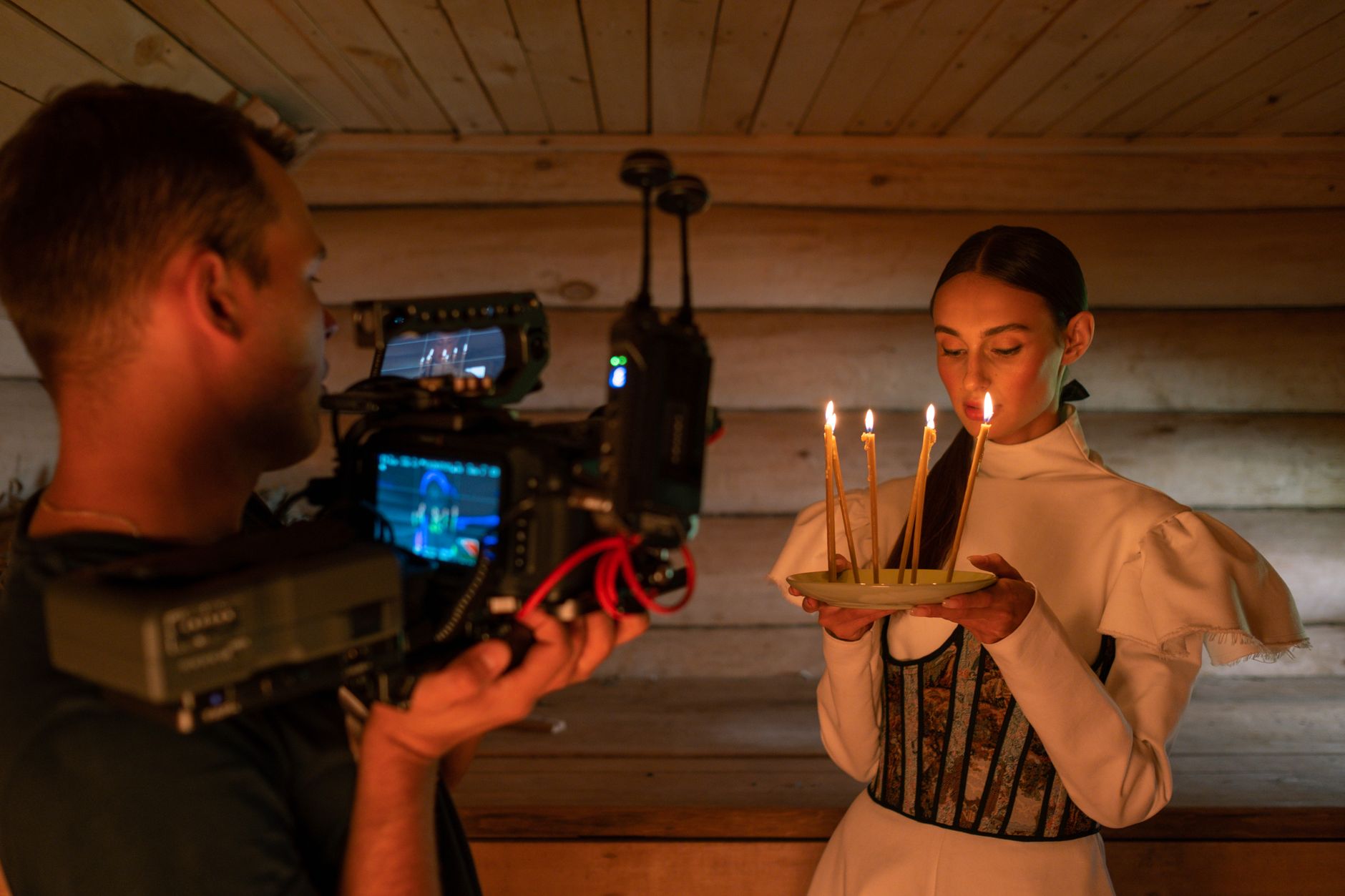
A workflow taught by Adobe Certified Instructors at Adobe Video World.
The invisibility effect makes a person or object disappear, revealing the background where they were — the magic cloak from movies. It’s achieved with a clean plate and compositing, and it’s surprisingly simple once you understand the trick. This guide covers creating a convincing invisibility effect in After Effects, from filming to compositing.

How Invisibility Works
The invisibility effect reveals the background where a subject should be, making them vanish. The core trick is filming the empty scene — a clean plate — then compositing that background over the area where the person or object is, erasing them.
It’s essentially the reverse of the clone effect: instead of adding a person, you remove one by patching in the empty background. The key, again, is a locked camera and a matching clean plate, which make the area where the subject was appear empty.

Lock the Camera and Film a Clean Plate
Start with a static camera and film a clean plate — the scene completely empty, with no subject present. This footage of the empty background is what you’ll use to erase the subject in the shot where they appear.
The camera must not move between the clean plate and the main shot, so the backgrounds align perfectly. Mounting on a tripod and keeping settings consistent, then filming both the empty scene and the action, gives you the two pieces you need.
Film the Action
With the clean plate captured, film the main action — the subject present, perhaps pulling a cloak over themselves or stepping behind it. Keeping the camera and lighting identical to the clean plate ensures the two will composite seamlessly.
The performance can include the moment of vanishing, like a cloak dropping over a person. Filming this with the same locked camera and consistent light as the clean plate provides the footage where you’ll reveal the empty background.

Composite the Clean Plate
In After Effects, place the clean plate on a layer above the action footage, then mask it to reveal the empty background only where the subject should disappear. The clean plate patches over the subject, making them vanish.
Because the clean plate and action share the same background, the masked-in empty area is invisible against the rest of the shot. Animating the mask to reveal more of the clean plate as the subject vanishes creates the disappearing effect.

Animate the Vanishing
The disappearance is animated through the mask. As the cloak covers the person, you grow the clean-plate mask to reveal the empty background underneath, so the area within the cloak shows nothing where the person was.
Timing the mask animation to the cloak’s movement, or the moment of vanishing, sells the effect. The person appears to become invisible as the empty background is progressively revealed in their place, frame by frame matching the action.
Refine the Edges
Clean edges are essential for the illusion. Feathering the mask and ensuring it follows the cloak or vanishing boundary precisely keeps the transition between the visible scene and the revealed background invisible.
Where the cloak edge moves, the mask must follow it accurately frame by frame. Careful, feathered masking around the moving boundary is what makes the invisible area blend seamlessly with the surrounding shot, hiding the composite.
Handle Lighting Consistency
As with all such effects, consistency between the clean plate and action is critical. Identical lighting and exposure ensure the patched-in background matches the rest of the shot, so the invisible area doesn’t appear as a different brightness.
Any change in light between the two takes makes the clean plate visible as a mismatched patch. Shooting both close together with locked settings, and color matching if needed with our matching tools, keeps the composite seamless.
Add Effects to Enhance It
You can dress up the vanishing for more magic. Adding a shimmer, distortion, or particle effect as the subject disappears makes the invisibility feel more supernatural, beyond the simple clean-plate reveal.
These embellishments, like a distortion ripple or a sparkle at the moment of vanishing, add flair. While the core effect is the clean-plate composite, a touch of magic at the transition elevates it from a simple disappearance to a spectacular one.
Invisibility Effect Best Practices
- Lock the camera and film a clean plate of the empty scene.
- Keep lighting and settings identical for the action shot.
- Mask the clean plate over the subject to erase them.
- Feather the mask and follow the vanishing boundary precisely.
Common Invisibility Mistakes
- Camera movement between the clean plate and action.
- Lighting changes that make the clean plate visible.
- A hard mask edge revealing the composite.
- A mask that lags behind the vanishing boundary.
A Real Invisibility Example
Picture a child pulling a blanket over themselves and vanishing. You lock the camera and first film the empty couch as a clean plate, then film the child sitting and pulling the blanket up. In After Effects you mask the clean plate over the area inside the blanket, growing the reveal as the blanket rises, so the space where the child sat shows only empty cushion.
Adding a subtle shimmer at the edge of the blanket as they disappear gives it a magical touch. Because the clean plate matched the action’s locked camera and lighting exactly, the patched background is invisible, and the child appears to vanish under the cloak — the classic invisibility trick built from nothing more than a clean plate and a mask.
Invisibility for Object Removal
The same clean-plate technique removes unwanted objects, not just people. A stand, a crew member, a wire, or a rig holding a prop can be erased by masking in the empty background from a clean plate, which is a workhorse trick across professional visual effects.
This makes the invisibility method a practical tool beyond the magic-cloak gag, useful any time something needs to disappear from a shot. Combined with tracking for moving shots and the careful masking the effect demands, clean-plate removal is one of the most-used techniques in everyday VFX cleanup and compositing.
Key Takeaways
- Invisibility reveals the empty background where a subject was.
- Film a clean plate and the action with a locked camera.
- Mask the clean plate over the subject to erase them.
- Keep lighting consistent and refine the mask edges.
Frequently Asked Questions
How do I make an invisibility effect in After Effects?
Lock your camera and film a clean plate of the empty scene, then film the action with identical settings. In After Effects, mask the clean plate over the subject to reveal the empty background, animating the mask as they vanish.
What is a clean plate?
A clean plate is footage of the scene completely empty, with no subject present, shot from a locked camera. It provides the empty background you composite over a subject to erase them for the invisibility effect.
Why does my invisibility effect show a visible patch?
Usually the camera moved or the lighting changed between the clean plate and the action, so the patched background doesn’t match. Keep the camera locked and the lighting identical, and feather the mask to blend the edges.
Sources: Wikipedia’s overview of clean plates and compositing.
Make things vanish at Adobe Video World
Train hands-on with Adobe Certified Instructors across 100+ Premiere Pro & After Effects sessions.