A workflow taught by Adobe Certified Instructors at Adobe Video World.
Looping animations and footage are everywhere — endless backgrounds, spinning logos, looping social posts, and seamless cinemagraphs. After Effects offers several ways to create loops, from a simple expression to time remapping. This guide covers how to loop keyframed animation and video footage, and how to make loops seamless.
Why Loops Are So Useful
A good loop creates the illusion of endless motion from a short clip, which is invaluable for backgrounds, social media posts, and any animation that needs to play continuously. Instead of building minutes of movement, you craft a few seconds that repeat invisibly.
Loops save enormous time and file size while keeping a video feeling alive. The challenge is making the repeat seamless, so the viewer never spots the moment it jumps back to the start, and that’s what the techniques below are designed to achieve.
Loop Keyframes with loopOut
The easiest way to loop keyframed animation is the loopOut expression. Animate one cycle of movement with keyframes, then Alt/Option-click the property’s stopwatch and type loopOut(), and After Effects repeats your keyframes endlessly with no copying.
This single expression, covered in our expressions guide, is perfect for spinning logos, bobbing elements, and pulsing icons. Change your keyframes and the loop updates automatically, which is far cleaner than duplicating keyframes by hand.
Use loopOut Pingpong
For animation that should reverse rather than jump, use loopOut("pingpong"). Instead of snapping back to the start, the animation plays forward then backward, bouncing smoothly between your first and last keyframes.
Pingpong is ideal for movements that look wrong when they cut — a pendulum swing, a breathing scale, a back-and-forth drift. Choosing between a standard loop and pingpong depends on whether your animation’s start and end naturally connect.
Loop Video Footage with Time Remapping
Looping footage rather than keyframes uses Time Remapping. Enable it on a footage layer (Layer > Time > Enable Time Remapping), then add a loopOut() expression to the Time Remap property, and the clip plays over and over.
This lets a short piece of video repeat endlessly, ideal for ambient backgrounds and texture. The same time-remapping foundation also powers speed effects, so it’s a versatile tool worth understanding.
Make a Seamless Loop
The hard part of any loop is hiding the seam where it restarts. The cleanest solution is to make your animation’s last frame match its first, so the jump back is invisible — the element ends exactly where it began.
For movement, design a full cycle that returns to the starting position, like a logo that spins exactly 360 degrees. When the end and start align perfectly, the loop plays forever with no visible cut, which is the hallmark of professional looping animation.
Loop Footage Seamlessly
Looping real footage seamlessly is trickier, since the last frame rarely matches the first. A common trick is to overlap the end and start with a cross-dissolve, blending the restart so the cut disappears into the transition.
For backgrounds and textures, you can also reverse the clip and append it, creating a pingpong that always returns smoothly to where it began. These techniques turn ordinary footage into a clean loop suitable for endless playback.
Create a Cinemagraph
A cinemagraph is a still photo with one small area of looping motion — drifting steam, rippling water, blinking eyes. You mask the moving region from a short video clip, loop it seamlessly, and composite it over a frozen frame of the same shot.
Cinemagraphs are striking precisely because most of the image is still while one element loops hypnotically. Combining a seamless footage loop with a careful mask is exactly how this elegant, eye-catching effect is built.
Export a Loop Correctly
When exporting a loop, make sure your composition is exactly one cycle long, with no extra frames that would cause a stutter on repeat. A single stray frame at the end breaks the seamless illusion the moment the video restarts.
For looping social posts, export as a video or animated GIF as the platform requires, following our export guide. Test the exported loop by playing it several times in a row to confirm the repeat is truly invisible.
Looping Best Practices
- Use loopOut() to repeat keyframed animation endlessly.
- Use loopOut(“pingpong”) for movements that should reverse.
- Make the last frame match the first for a seamless loop.
- Trim the composition to exactly one cycle before exporting.
Common Looping Mistakes
- An end frame that doesn’t match the start, causing a visible jump.
- Extra frames in the comp that stutter on repeat.
- Duplicating keyframes by hand instead of using loopOut.
- Forgetting to test the loop by playing it several times.
A Real Looping Background Example
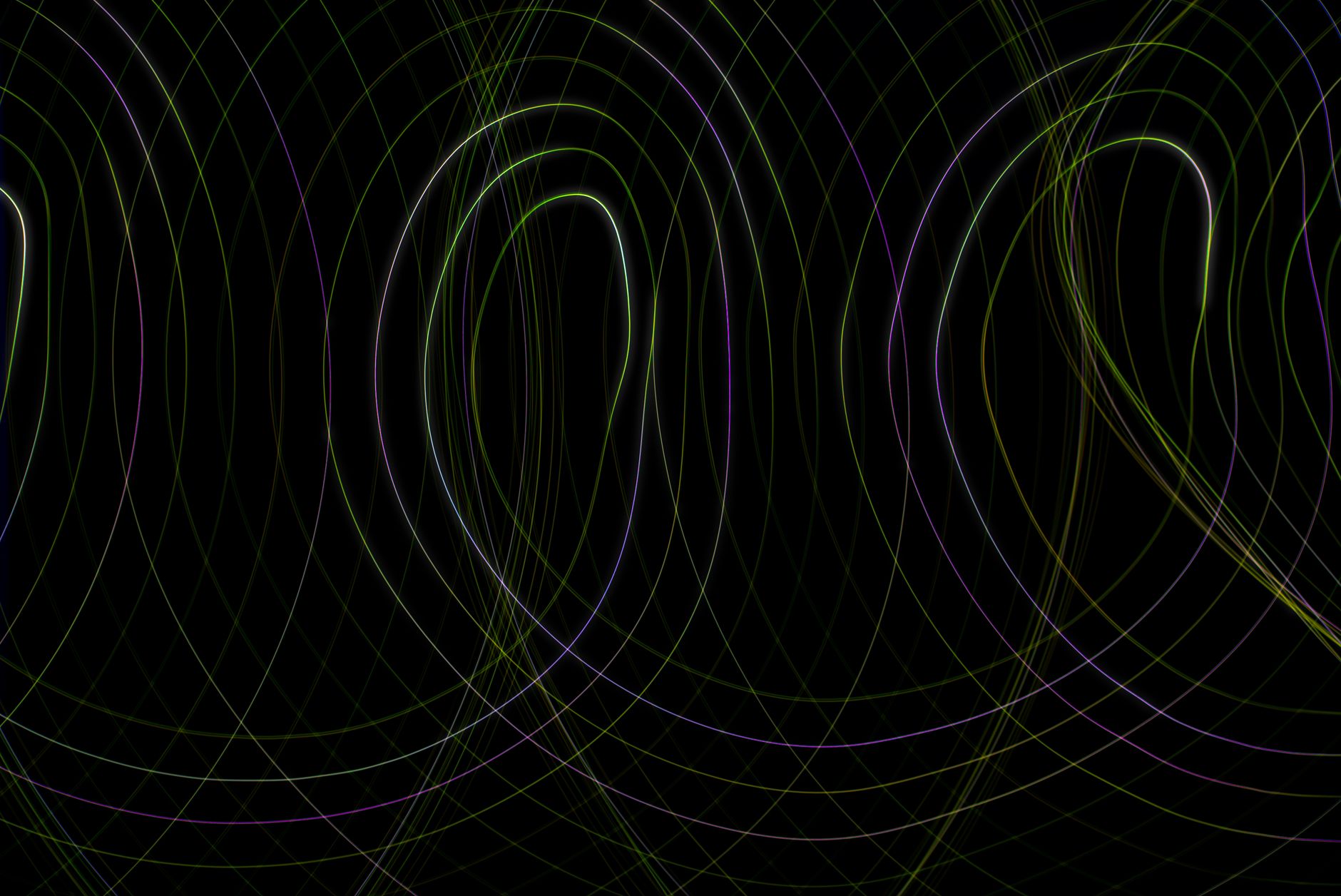
Say you need an endless animated background of drifting particles for a title screen. You animate the particles moving across one full cycle, ensuring the last frame’s arrangement matches the first, then add loopOut to repeat it forever. The background now plays continuously with no visible seam.
Because it’s expression-driven, you can tweak the particle motion and the loop updates automatically, and you can layer a subtle glow over it for atmosphere. A few seconds of carefully looped animation becomes an infinite, polished backdrop that keeps a screen feeling alive.
Loop for Social Media
Looping content thrives on social platforms, where short videos replay automatically and a seamless loop keeps viewers watching far longer than they realize. A satisfying, endless loop is one of the most shareable formats online, so it’s worth perfecting the seam.
Export your loop at the exact length of one cycle and in the format each platform prefers, following our export guide. Test it by letting it replay several times, because on social media the loop will run dozens of times, and any tiny stutter at the restart will eventually be noticed.
Plan Your Loop From the Start
The cleanest loops are designed to loop from the very beginning rather than fixed afterward. Before you animate, decide where your cycle starts and ends, and build the motion so it returns naturally to its origin. A spin of exactly 360 degrees, a drift that circles back, or a pulse that completes a full breath all loop invisibly because they were planned that way.
Retrofitting a loop onto animation that was never meant to repeat is far harder, usually requiring crossfades or reversed sections to hide a mismatched seam. Spending a moment up front to plan the cycle saves that cleanup entirely, and it is the single habit that most reliably produces a flawless, professional loop.
Key Takeaways
- Loop keyframes instantly with the loopOut expression.
- Loop footage by adding loopOut to Time Remapping.
- Match the last frame to the first for a seamless loop.
- Trim to one cycle and test before exporting.
Frequently Asked Questions
How do I loop an animation in After Effects?
Animate one cycle with keyframes, then Alt/Option-click the property’s stopwatch and type loopOut(). After Effects repeats your keyframes endlessly. Use loopOut(“pingpong”) for animation that should reverse.
How do I loop video footage in After Effects?
Enable Time Remapping on the footage layer (Layer > Time > Enable Time Remapping), then add a loopOut() expression to the Time Remap property so the clip plays over and over.
How do I make a loop seamless?
Design the animation so its last frame matches its first, like a logo spinning exactly 360 degrees. For footage, cross-dissolve the end into the start, or reverse and append it to return smoothly.
Sources: Wikipedia’s article on the cinemagraph.
Create seamless loops at Adobe Video World
Train hands-on with Adobe Certified Instructors across 100+ Premiere Pro & After Effects sessions.